Overview
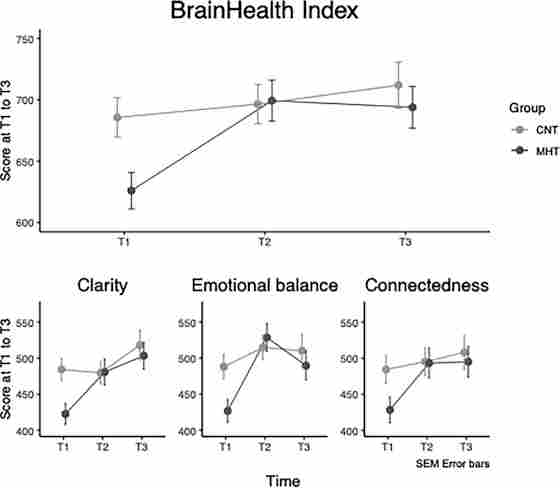
Read full research articleThe menopause transition brings a wide range of cognitive, emotional and physical symptoms that can significantly affect women's quality of life and brain health — yet remains one of the most underfunded areas of women's medicine. Researchers at UT Dallas's Center for BrainHealth set out to fill a critical gap: rather than looking only at physical symptoms, they asked whether personalized menopausal hormone therapy (MHT) could measurably improve the full picture of brain health — including memory, emotional stability and social connectedness. To capture this, they used the validated, multidimensional BrainHealth Index (BHI), a tool specifically designed to measure brain potential and track meaningful change over time across cognitive, emotional, and social domains.Forty-two postmenopausal women were assessed at baseline, 6 months and 12 months. After their initial assessment, participants began personalized, titrated MHT — estradiol and testosterone delivered via subcutaneous implants, plus nightly oral micronized progesterone — with doses calculated using each individual's hormone lab values, weight, and symptom profile. Thirty-six women from a separate database, matched on age and education, served as a control group. This approach was notably holistic: rather than targeting a single hormone or symptom, the protocol treated all three key sex hormones simultaneously, and brain health was evaluated across reasoning, memory, sleep, mood, resilience, social engagement and more.At baseline, the MHT group showed significantly lower scores across all brain health measures compared to controls — reflecting the real cognitive and emotional toll of menopausal symptoms. After starting MHT, however, participants showed significantly greater improvements across all indices by the 6-month mark, reaching scores comparable to the control group, and those gains were maintained at 12 months. The findings are promising but preliminary. Future larger, randomized controlled trials are needed to confirm the results, explore the individual contributions of each hormone, compare delivery methods such as oral versus subcutaneous pellets, and evaluate the BHI as a standard clinical tool for midlife women. Understanding the role of testosterone in women's brain health — still vastly understudied despite its wide receptor presence in the brain — stands out as a particularly urgent frontier.Below: Figure 2. BrainHealth Index Change Scores Over Time. CNT, control; MHT, menopausal hormone therapy.