How your brain handles divided attention...
Overview
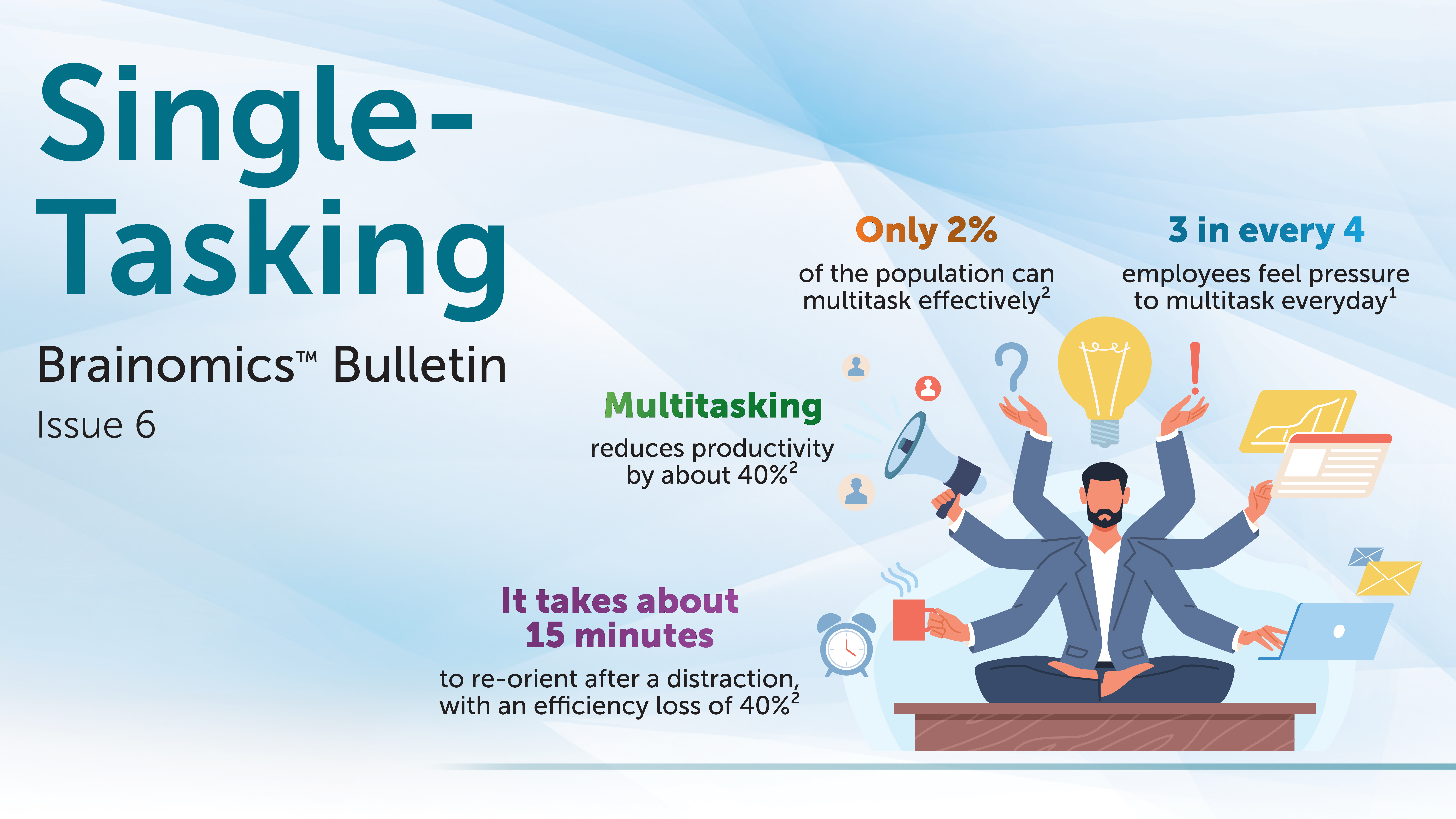
Multitasking has emerged as a widespread habit that may at times feel productive, but research show the habit actually strains the brain.Center for BrainHealth’s work is continuing to show how cognitive overload diminishes clarity, efficiency and well‑being, underscoring how brain‑based insights from BrainHealth experts can help people understand why focused attention strengthens mental performance. This topic reveals how the brain responds when attention fragments across competing tasks, illustrating the cognitive, emotional and behavioral consequences of constant task switching.“”
Stacy Vernon, MS, LPC, Head of Adult Assessment at Center for BrainHealth, explains that “multitasking is asking the brain to fire in multiple directions at once. It’s scattershot,” and notes that electrical activity becomes more diffuse when people attempt to multitask.
Vernon describes how goal shifting disrupts working memory, causing lingering interference from the previous task’s "rules," She emphasizing that repeated task switching trains the brain to interrupt focused thought, making sustained attention feel uncomfortable.Identifying signs of overload — including sleep trouble, racing thoughts, and difficulty slowing down — can help cue people in to the need to recalibrate. Vernon recommends “brain breaks” of three to five minutes, taken five times a day, to help the brain reset, and encourages two daily periods of concentrated single‑tasking for 20–30 minutes. Evidence shows that batching tasks by theme can also support attention and memory.Read the full article at WebMD