Facebook pixel
Go to home page
Young man wearing headphones and glasses sits at a cluttered desk, thoughtfully looking at a tablet while holding a pen.

Improving Mental Health Outcomes Through Online Brain Health Training in Adults With or Without Mental Illness

Frontiers in Psychology

Sarah A. Laane, Lori G. Cook, Jeffrey S. Spence and Sandra Bond Chapman

Overview

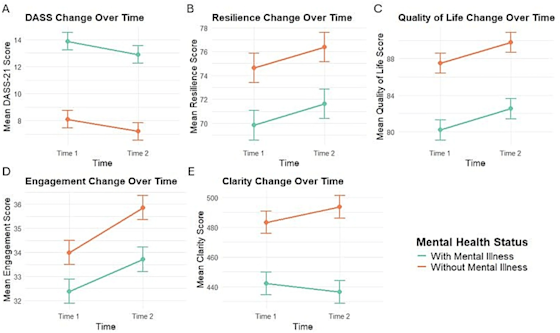
Read full research articleThis novel study explores whether five-minute daily practices from Strategic Memory Advanced Reasoning Training (SMART™) — an online brain‑health training program combining strategic thinking exercises with simple daily habits — can improve mental well‑being in adults both with and without diagnosed mental illness. Over six months, participants who completed the program showed meaningful improvements in psychological distress, resilience, quality of life, and engagement in meaningful activities. Across all participants, improvements in thinking were linked to better mental health, suggesting that an accessible, online, strategy-based style of cognitive training can support emotional well‑being and mental health at scale for a wide range of adults and communities. Research findings confirm that strengthening the brain through accessible, online training can meaningfully improve mental health, even for individuals living with diagnosed mental illness, offering a significant step beyond traditional mental health approaches, which tend to focus on treating symptoms. In contrast, this research highlights a proactive, skills‑based approach that empowers people to build resilience, improve clarity of thinking, and enhance quality of life. Because this program is digital, it can reach people who may face obstacles to participating in effective mental health interventions, like those who lack access to therapy, live in rural areas, face stigma, or struggle with cost or scheduling barriers. In short, this work suggests that brain health training could become a scalable, population‑level tool for improving emotional well‑being and reducing the burden of mental health challenges.
Figure 3. Changes in mental health outcomes and clarity by mental illness status from pre to post brain health training. For panel (A), higher scores represent greater symptoms of psychological distress and therefore indicate a less favorable outcome. For panels (B–E), higher scores represent more favorable outcomes.
Read full research article

Share this article


Sarah Laane, PhD.

Sarah Laane, PhD, CCC-SLP

Research Scientist Donald Bloom Mental Health Promotion Fellow

Lori Cook in a blue blouse with blue lights, portrait. Director of Clinical Research, BrainHealth Research; Head of Research, The BrainHealth Project; Adjunct Assistant Professor, School of Behavioral and Brain Sciences

Lori Cook, PhD, CCC-SLP

Director of Clinical Research Head of Research, The BrainHealth Project Adjunct Assistant Professor, School of Behavioral and Brain Sciences

Headshot of Jeffrey S. Spence, PhD

Jeffrey S. Spence, PhD

Director of Biostatistics

Sandi Chapman, Founder and Chief Director, Center for BrainHealth, Co-Leader, The BrainHealth Project, Dee Wyly Distinguished Professor

Sandra Bond Chapman, PhD

Chief Director Dee Wyly Distinguished Professor, School of Behavioral and Brain Sciences Co-Leader, The BrainHealth Project


Related Information

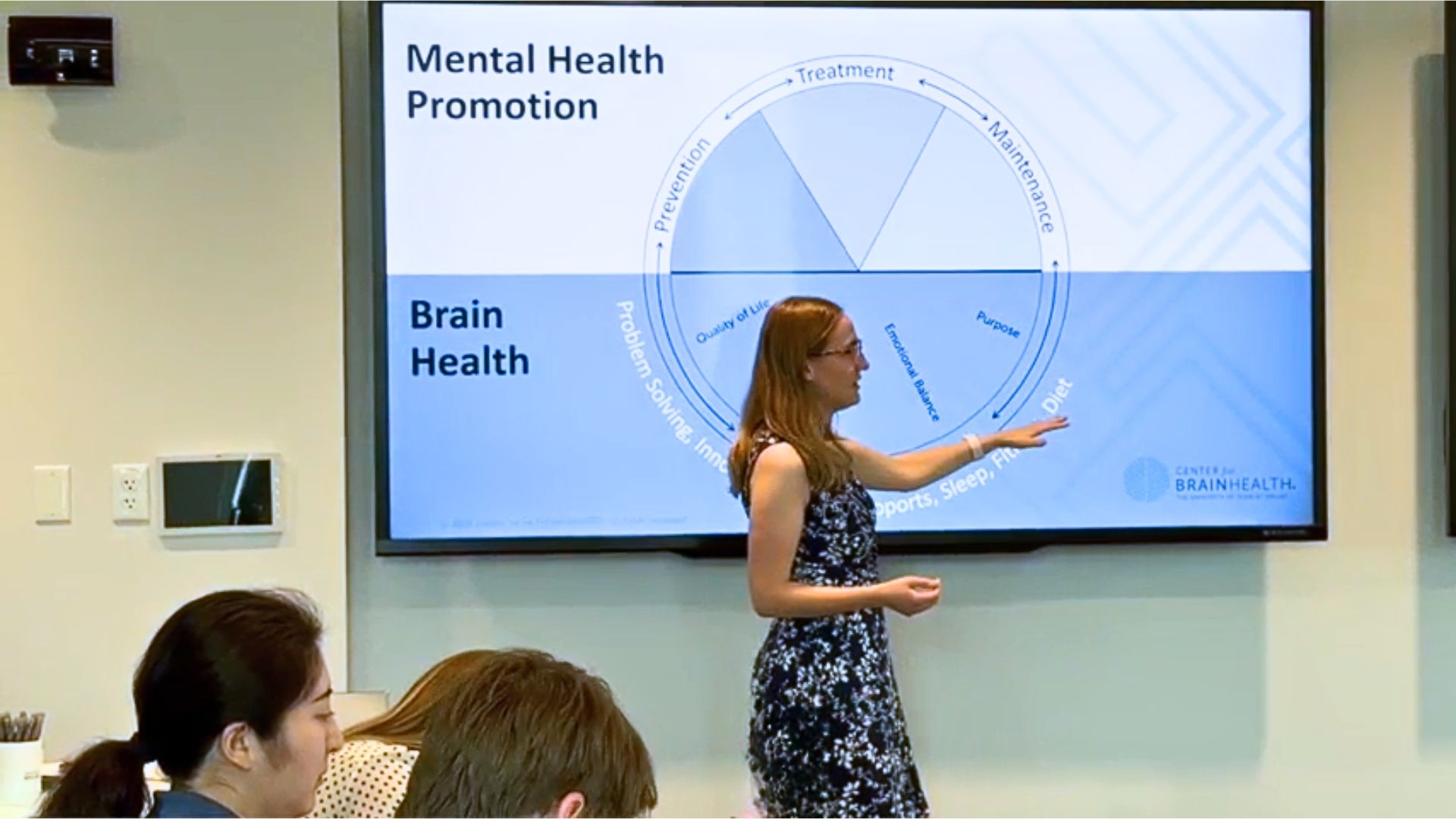
Research scientist Sarah Laane, PhD, presents at Center for BrainHealth, part of The University of Texas at Dallas.

New Frontiers in Psychology Study Flips Mental Health Paradigm: Proactive Brain Training Builds Community Resilience Before Crisis Hits

A new study challenges the traditional, reactive model of mental health care by demonstrating that proactive brain training can prevent mental health challenges and support wellness for those with history of mental illness. Strategy-based cognitive training delivered digitally can serve as a scalable, preventive shield to fortify community health.

Children in red shirts holding signs with positive messages like "Choose Hope" and "Choose Kindness" at Momentous Institute, a Dallas-area nonprofit that has partnered with Center for BrainHealth to research and grow the impact of mental and brain health awareness in early education.

Early Education on Brain Health and Mental Health Can Promote Thriving Across the Lifespan

In a recent study, Center for BrainHealth researchers helped follow alums from a pre-K through 5th grade Momentous school, finding this group reached lifetime earnings totaling $157M, among other clear signs that investing in brain health for young learners paves the way for a brighter future.