Copilot said:
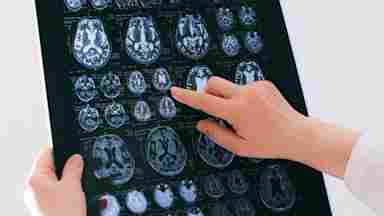
A new research collaboration involving Center for BrainHealth researchers identifies MRI-based biomarkers that reveal measurable physical changes in the brain as brain health improves, providing evidence that daily habits and cognitive training are associated with ongoing neuroplastic adaptation throughout adulthood. These findings align closely with the center’s mission to understand, measure and optimize brain performance while advancing precision approaches that track brain health over time. The topic carries broad significance because it connects behavioral improvement with observable changes in brain structure rather than relying solely on self-reported outcomes or traditional cognitive measures. Advanced neuroimaging techniques detect shifts in cortical complexity across healthy adults, showing that the adult brain remains dynamic and responsive to brain-healthy behaviors. The work highlights a future in which personalized brain health strategies are informed by biological markers, helping individuals strengthen cognitive clarity, emotional balance, and overall performance across the lifespan. The study, co-authored by BrainHealth Network collaborator Robyn A. Honea, PhD, of Honea NeuroPrecision LLC and Kansas University Medical Center, alongside scientists from the University of California, Berkeley, and Center for BrainHealth at The University of Texas at Dallas, identified specific, sex-informed MRI biomarkers that track changes in an individual's brain health trajectory over time. Researchers use advanced surface-based morphometry to evaluate cortical features including gyrification index (GI), sulcal depth (SD) and fractal dimension (FD). The center's BrainHealth Index, a scientifically-informed approach to measuring brain health and performance, was used in the study to track changes in brain health over time. Improvements in BrainHealth Index scores are significantly linked to underlying changes in brain neuroanatomy over time.“”
Mark D'Esposito, MD, distinguished professor of neuroscience at UC Berkeley and co-leader of The BrainHealth Project, a longitudinal study at Center for BrainHealth, commented that “these findings represent a major milestone made possible by the Center's BrainHealth Network. ... By leveraging this collaborative network of leading scientists and sharing robust, multisite neuroimaging data, we are moving from theoretical neuroplasticity to hard, physical proof. This collaborative infrastructure is exactly what allows us to accelerate discoveries that can shift medicine from a reactive model to proactive, precision brain health.”
Continued research through initiatives such as the BrainHealth Network and The BrainHealth Project may help refine personalized interventions that support cognitive performance, healthy aging, and proactive brain care.Read more at: MedicalXPress