Facebook pixel
Go to home page
Decorative cover image for the Brainomics Bulletin: Economics of Taking a Brain Break.

Economics of Taking a Brain Break

Center for BrainHealth

BRAINOMICS BULLETIN
Open Printable PDF
At Center for BrainHealth, one of the first strategies we give people for better brain performance is to take five-minute brain breaks throughout the day. A true brain break means pausing intake of new information – it’s not chatting with coworkers or scrolling the news. Instead, it’s about letting go of focused attention. What that looks like can take many forms: breathing, walking, gazing out a window, resting your head, or simply closing your eyes.
Short breaks allow the mind to wander, helping downregulate stress and recharge mental energy.2 Many workers feel pressured by job demands and fear losing momentum, choosing to power through instead of take periodic breaks.3 However, neuroscience shows that being constantly locked in on work leads to fatigue, distraction and poorer decision-making. Still, you might be thinking: “Five minutes of doing nothing? Multiple times each day? I have too much to get done.”

But what if we show you that brief breaks actually translate into economic benefit?

  • SUSTAINED PERFORMANCE: Breaks reduce cognitive load, helping to prevent decision fatigue and mistakes. This translates to sustained output and less time and money spent correcting errors.
  • HIGHER INNOVATION: During periods of rest, the brain’s Default Mode Network becomes more active, quietly working in the background. Even a five-minute incubation period increases innovative capacity, helping solve problems and generate new ideas.4,5
  • FASTER LEARNING AND UPSKILLING: Short intervals of rest boost memory consolidation.6 Breaks help individuals learn and retain new information more quickly, cutting costs of training (and retraining) and fueling bumps in creativity, helping employees do more with what they know.
  • REDUCED ATTRITION AND STRONGER WORKPLACE CULTURE: Employees who take breaks feel less drained and more autonomous. In turn, this lowers turnover and increases motivation, helping to build a healthier, more resilient work environment.
It may feel counterintuitive to take those five minutes for yourself, but it’s clear that stopping work periodically to reset actually helps you do more. Think about breaks during physical exercise – you have to take short rests to perform at your best and avoid fatigue. Why wouldn’t you do the same for your brain? Our reminder to leaders is to set an example: Take five, f ive-minute breaks every day.

HIDDEN HEALTHCARE COSTS

By taking these breaks and encouraging your team to follow your lead, you are increasing productivity, long-term economic value, and trust within your workplace culture. Taking pauses from strenuous work or constant screen time reduces muscle and eye strain – which, in turn, lowers absenteeism and presenteeism, both of which are expensive for organizations. If you primarily work on a computer, try the 20/20/20 rule: focus your eyes on something 20 feet away for 20 seconds every 20 minutes.7

Citations

1. Slack Workforce Index, Wave 11. (2023) The Surprising Connection Between After-Hours Work and Decreased Productivity. The Slack Blog.
2. Center for BrainHealth. Breaks to Boost Innovation. Know Brainers: Brain-Healthy Tips.
3. Phan V. & Beck J. (2023). Why Do People (Not) Take Breaks? An Investigation of Individuals' Reasons for Taking and for Not Taking Breaks at Work. Journal of Business and Psychology.
4. Ritter S. & Dijksterhuis A. (2014). Creativity – the Unconscious Foundations of the Incubation Period. Frontiers in Human Neuroscience.
5. Albulescu P, et al. (2022). "Give Me a Break!" A Systematic Review and Meta-Analysis on the Efficacy of Micro-Breaks for Increasing Well-Being and Performance. PloS One.
6. Dewar M, et al. (2012). Brief Wakeful Resting Boosts New Memories Over the Long Term. Psychological Science.
7. Whelan C. (2017). How Does the 20-20-20 Rule Prevent Eyestrain? Healthline.

Share this article


Headshot of Andrew Nevin, PhD

Andrew S. Nevin, PhD

Inaugural Director, Brainomics Venture Research Professor


Related Information

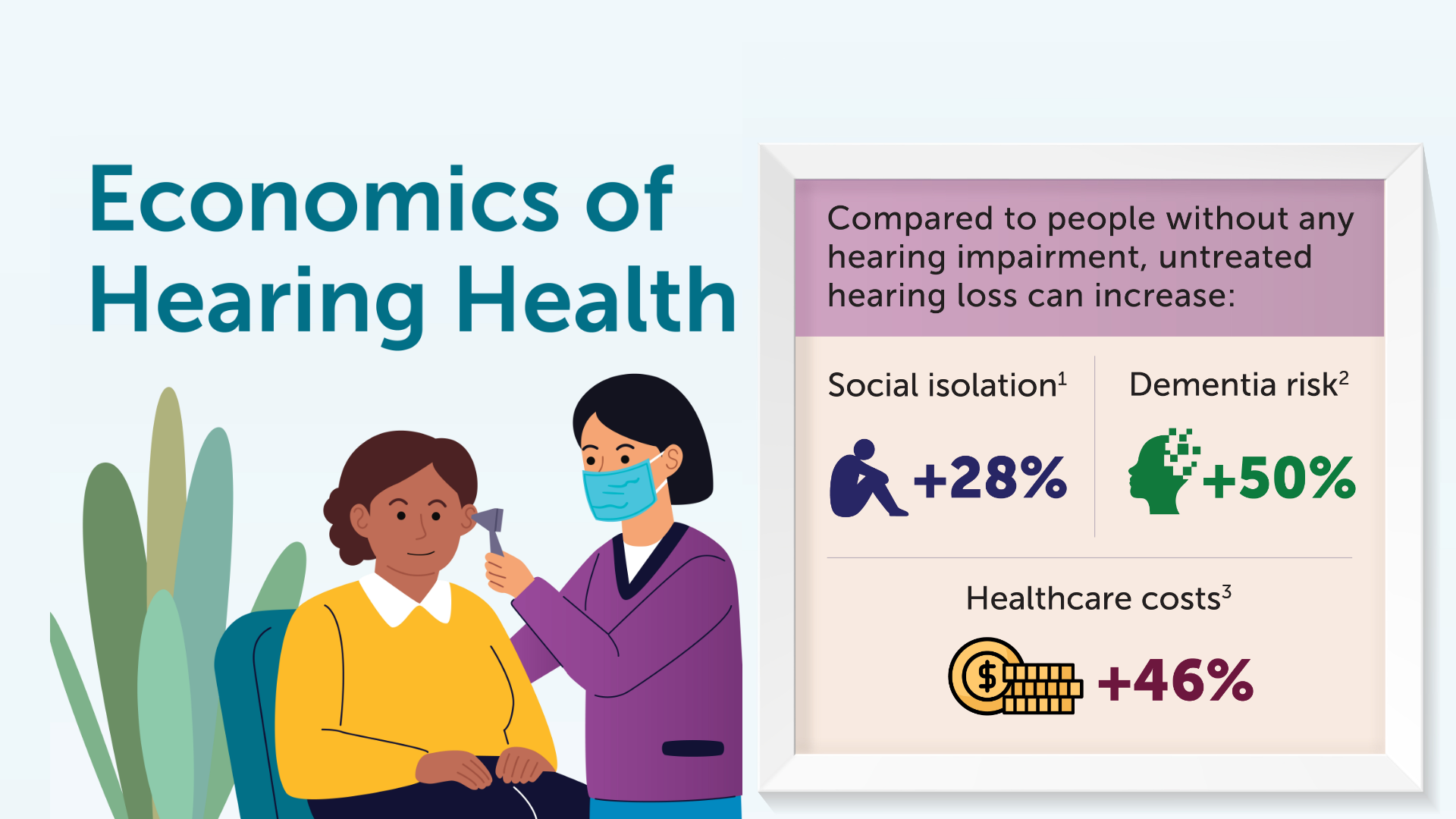
Brainomics Bulletin: Economics of Hearing Health cover image, with graphic of a hearing exam and related statistics, showing the impact of hearing on brain health (28% increase in social isolation, 50% increase in dementia risk, and 46% increase in healthcare costs).

Economics of Hearing Health

No one waits to go blind before getting glasses, yet only 1 in 7 individuals with hearing loss wears hearing aids. Simply put, when hearing health is compromised, so is the richness of human interaction – an important aspect of brain health across the lifespan. The good news is prevention and early action can make a difference.

Brainomics Bulletin Issue 4, March 6 2024.

Labor Force Participation

Did you know that if the U.S. had the same labor participation rate as Sweden, our economy would be $1.7 trillion bigger? We need to investigate why so many U.S. workers are disengaged and how to create a productive and purposeful labor force where both people and economies can thrive.

Economics of Agency, Brainomics Bulletin Issue 5, April 2024, Center for BrainHealth.

Brainomics of Agency

Agency is the ability and belief that one can control their own life. In the workplace, it means the freedom and choice over the "where," "what," "how," "why" and "when" of work. Agency is linked to many brain health benefits, but does agency have an economic impact?

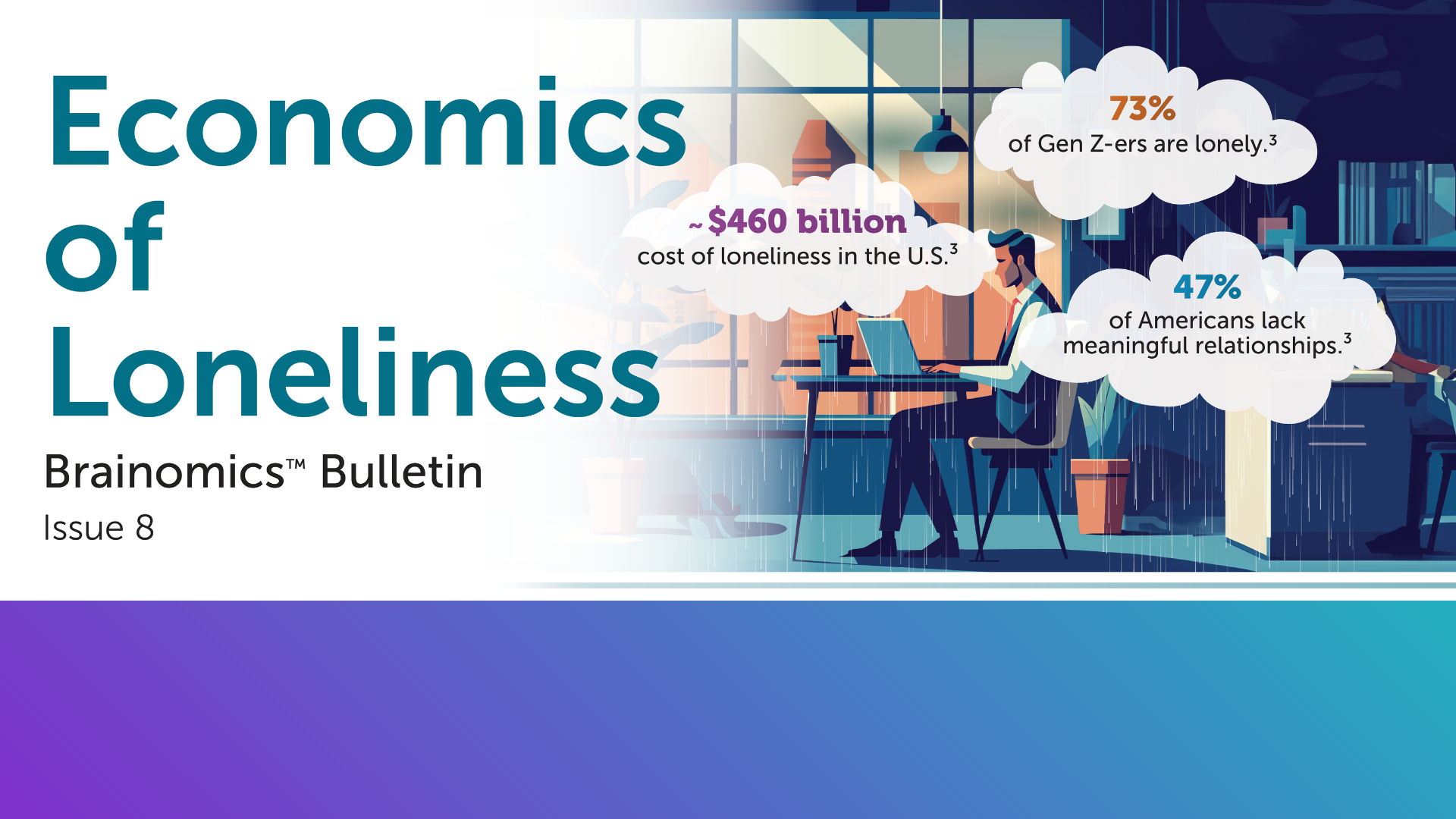
Economics of Loneliness, Brainomics Bulletin, Issue 8.

Economics of Loneliness

Loneliness costs the U.S. economy at least $406 billion. Neuroscience tells us loneliness significantly impacts the brain, functionally and physically. However, there is hope. Interventions that encourage social connection have been shown to have a positive measurable impact.

Electronic display of daily stock exchange viewed along a city street full of people.

Brainomics Venture

We are taking a broader view of brain health, translating 30 years of science into economic impacts. When communities sustain brain health, it follows that there will be a larger economic benefit. Measuring and extending that benefit to drive improved organizational outcomes as well as policy initiatives is the focus of Brainomics®.