
Read full research article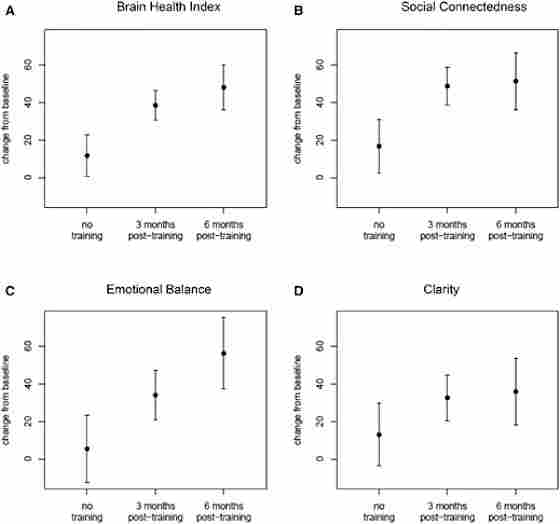
OVERVIEW
The Warfighter Brain Fitness (WBF) study is a randomized control trial examining whether online cognitive training can improve resilience and overall brain health in a healthy, military‑affiliated population. Enrolling 400+ National Guard service members and their spouses, the study aims to determine how different cognitive training approaches may improve brain resilience, measured through Center for BrainHealth's BrainHealth Index (BHI).Using a 2‑year crossover design with multiple training sequences, the study applies two validated cognitive training programs — BrainHQ® and Strategic Memory Advance Reasoning Training (SMART™). Brain HQ offers adaptive online cognitive exercises targeting attention, memory, processing speed and social cognition, whereas SMART engages top-down cognitive control, taking a strategy-based, executive function approach that targets three core cognitive processes: strategic attention, integrated reasoning, and innovation. Key findings from this new research support significant improvements across three domains of cognitive health (clarity, emotional balance and connectedness) and improved BHI scores after training. Researchers highlighted improvements in resilience, especially connectedness, and observed that the two distinct approaches were synergistic, with participants showing more improvement more after completing both trainings, rather than one or the other alone. Overall, both training programs demonstrated equal efficacy and the order of completion did not appear to matter.Researchers note the need for continued investigation of individualized brain fitness protocols (for maximum benefit), benefits to psychological and social well‑being (e.g., neuroplasticity, emotion regulation), long‑term effects (beyond the 2‑year window), and whether similar benefits occur in active‑duty military, veterans and other high‑stress populations.