Facebook pixel
Go to home page
Scientist Robyn A. Honea, PhD, presents at Center for BrainHealth in Dallas, Texas duriing BrainHealth Week 2026.

Newly Identified MRI Biomarkers Reveal Physical Brain Changes from Cognitive Training, Study Finds

Center for BrainHealth

Longitudinal neuroimaging study shows that positive changes in the multidimensional BrainHealth Index correlate with structural adaptations in key brain networks.A new neuroimaging study published in the journal Brain Imaging and Behavior provides some of the first evidence that strengthening your brain health through daily habits actually rewires its physical architecture. The research, co-authored by BrainHealth Network collaborator Robyn A. Honea, PhD, of Honea NeuroPrecision LLC and Kansas University Medical Center, alongside scientists from the University of California, Berkeley, and Center for BrainHealth at The University of Texas at Dallas have identified specific, sex-informed MRI biomarkers that track along with changes in an individual's brain health trajectory over time.The study tracked 190 healthy adults (aged 20–70, with 94 women and 96 men) who underwent up to five MRI scans over a four-year period. Rather than utilizing traditional gross volumetric metrics, researchers employed advanced surface-based morphometry (SBM) to evaluate nuanced features of cortical complexity, including gyrification index (GI), sulcal depth (SD), and fractal dimension (FD). These structural adaptations were analyzed alongside participants' changing scores on the BrainHealth Index, which is a validated, multidimensional composite developed by Center for BrainHealth that tracks cognitive clarity, social connectedness, and emotional balance.

KEY RESEARCH FINDINGS

  • The brain’s structure can be rewired: Self-reported improvements in the BrainHealth Index were significantly linked to underlying, state-like changes in the brain's neuroanatomy, reinforcing that neural efficiency drives structural optimization across adulthood.
  • Cortical complexity is a biomarker: Significant increases in the gyrification index (the complexity of cortical folding) were found in the left insula and posterior cingulate cortex as participants’ brain health scores improved over time. The insula acts as a critical hub connecting key brain networks responsible for higher-order cognition.
  • Sex-specific trajectories in women: In female participants, gains in brain health correlated uniquely with increased sulcal depth within the left precuneus, middle temporal gyrus, and right cingulate gyrus—regions highly associated with memory processing, emotional regulation, and successful cognitive aging.
  • Predictive traits in men: In male participants, higher baseline brain health scores predicted a significant increase in fractal dimension over time within the left inferior parietal cortex, indicating that baseline cortical complexity can serve as a trait marker identifying individuals primed for brain health optimization.

“”

“This study marks a significant leap forward in precision brain health by demonstrating that a holistic, multidimensional index of human performance actually covaries with physical, measurable changes in brain architecture,” said corresponding author Robyn A. Honea, PhD, with Honea NeuroPrecision LLC and Kansas University Medical Center. “By proving that surface-based structural features like gyrification and sulcal depth adapt alongside behavioral gains, we show that the adult brain remains structurally dynamic and capable of optimization throughout the lifespan.”

“”

“These findings represent a major milestone made possible by the Center’s BrainHealth Network,” said co-author Dr. Mark D'Esposito, MD, professor of neuroscience at UC Berkeley and co-leader of the BrainHealth Network. “By leveraging this collaborative network of leading scientists and sharing robust, multi-site neuroimaging data, we are moving from theoretical neuroplasticity to hard, physical proof. This collaborative infrastructure is exactly what allows us to accelerate discoveries that can shift medicine from a reactive model to proactive, precision brain health.”
Participants in this naturalistic cohort were enrolled in The BrainHealth Project, a landmark longitudinal study exploring the dynamic relationship between lifestyle factors, biological markers, brain training and cognitive performance – giving them optional access to digital micro-learning strategy modules (SMART brain training) and personalized coaching intended to build daily brain-healthy habits.

“”

“Every brain has a unique structural profile and an inherent capacity for positive neuroplastic change,” said co-author Lori Cook, PhD, CCC-SLP, director of clinical research at Center for BrainHealth and BrainHealth Network collaborator. “These findings encourage a sex-informed lens when mapping structural MRI biomarkers to cognitive enhancement. Moving forward, combining behavioral indices with advanced morphometric tracking will allow us to tailor interventions to individual neuroanatomical profiles, empowering people to actively manage and optimize their brain performance.”
This collaborative research was supported in part by private philanthropy, including Sammons Enterprises, Inc., and the National Institutes of Health (NIH).CONTACT Stephanie Hoefken stephanie.hoefken@utdallas.edu

About the BrainHealth Network

The BrainHealth Network is a groundbreaking collaborative initiative connecting researchers across the country to understand brain health improvement through advanced MRI imaging and data analysis from one of the most comprehensive multimodal brain imaging datasets ever assembled. Directed by Dr. Mark D’Esposito and Dr. Sandra Bond Chapman, the Network is accelerating data analysis and promoting discoveries to benefit society, human health, transparency, reproducibility and innovation. Its ultimate goal is to create predictive models that can inform personalized interventions and make brain health tracking as accessible and routine as monitoring nutrition, heart rate or sleep.

About Center for BrainHealth

Center for BrainHealth®, part of The University of Texas at Dallas, is a nonprofit translational research institute committed to enhancing, preserving, and restoring brain health across the lifespan. Major research areas include the use of functional and structural neuroimaging techniques to better understand the neurobiology supporting the continual growth of cognition, well-being and social connections in health and disease. This leading-edge scientific exploration is translated quickly into practical innovations to improve how people think, work and live, empowering people of all ages to thrive and unlock their brain potential. Translational innovations leverage 1) the BrainHealth Index, a proprietary measure that uniquely charts one’s upward (or downward) brain health trajectory whatever their starting level; and 2) Strategic Memory Advanced Reasoning Tactics (SMART™) brain health training, a strategy-based toolkit developed and tested by BrainHealth researchers and other teams over three decades. The center's landmark longitudinal study, The BrainHealth Project, launched in 2020 with the goal of identifying actionable strategies for optimizing brain health throughout life, uncovering the dynamic relationship between lifestyle factors, biological markers, brain training and cognitive performance. It is co-led by Dr. Sandi Chapman, Dr. Mark D'Esposito, Dr. Geoff Ling, Dr. Ian Robertson, Dr. Vince Calhoun and Tom Leppert, with Georgeann and Adm. William McRaven (ret.) serving as national spokespersons.

Share this article


Dr. Mark D'Esposito is a distinguished professor of neuroscience and psychology at the University of California, Berkeley and the Carol Heller BrainHealth Project Co-Leader.

Mark D’Esposito, MD

Co-Leader, The BrainHealth Project

Sandi Chapman, Founder and Chief Director, Center for BrainHealth, Co-Leader, The BrainHealth Project, Dee Wyly Distinguished Professor

Sandra Bond Chapman, PhD

Chief Director Dee Wyly Distinguished Professor, School of Behavioral and Brain Sciences Co-Leader, The BrainHealth Project

Lori Cook in a blue blouse with blue lights, portrait. Director of Clinical Research, BrainHealth Research; Head of Research, The BrainHealth Project; Adjunct Assistant Professor, School of Behavioral and Brain Sciences

Lori Cook, PhD, CCC-SLP

Director of Clinical Research Head of Research, The BrainHealth Project Adjunct Assistant Professor, School of Behavioral and Brain Sciences

Headshot of Jeffrey S. Spence, PhD

Jeffrey S. Spence, PhD

Director of Biostatistics


Related Information

Silhouettes of people facing a glowing blue digital brain in a futuristic neon cityscape with streaming light particles.

Longitudinal Surface-Based Morphometry Reveals Potential MRI Biomarkers Correlated With Multidimensional Brain Health Measures

This study shows BrainHealth Index scores can improve over time and are associated with functional neuroimaging measures such as hemodynamic responses. Identifying MRI-derived markers that track with BHI improvements advances efforts toward precision brain health and interventions tailored according to an individual's neuroanatomical profile.

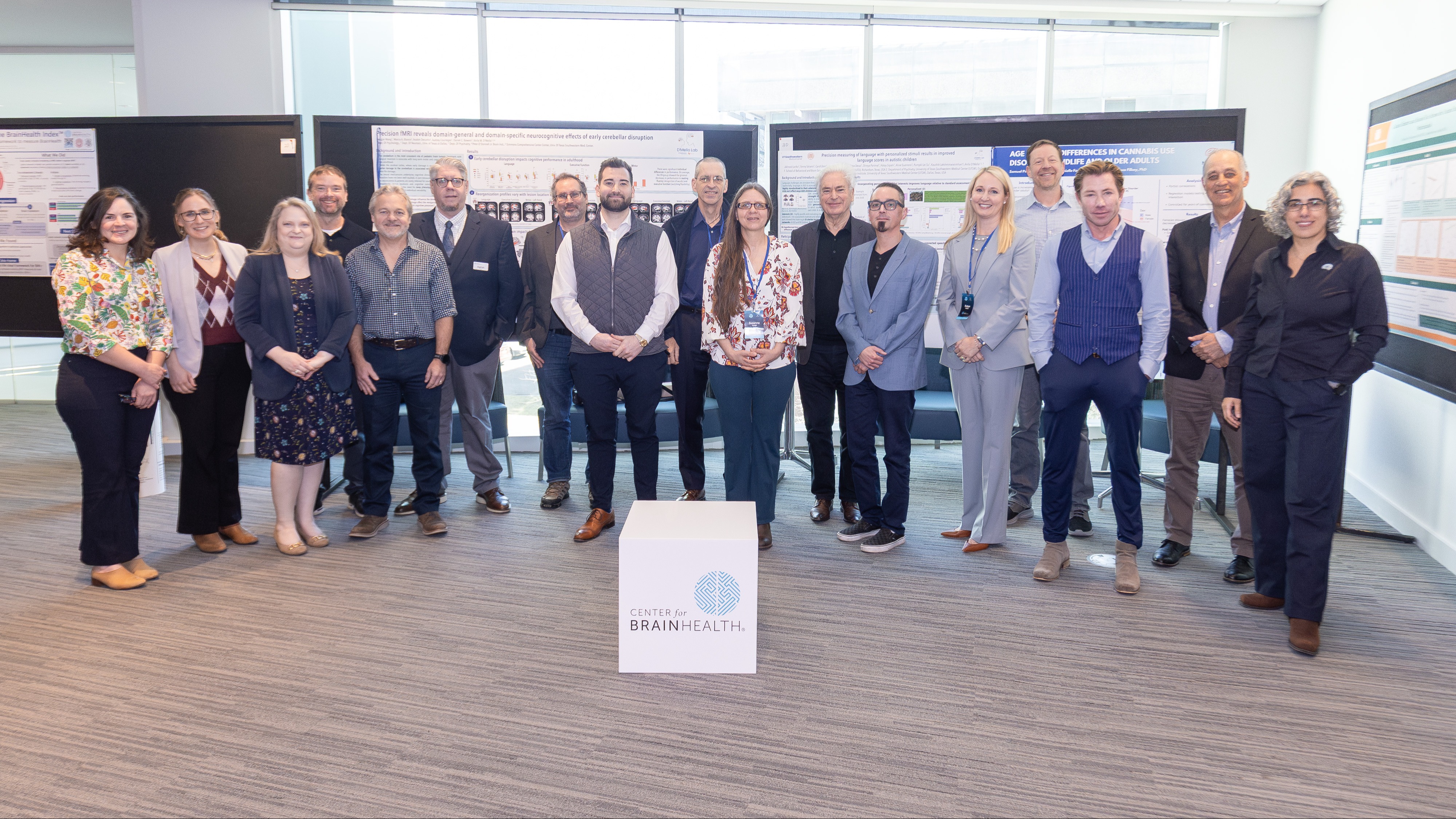
Founding members of the BrainHealth Network convene in a sunlit corner of Center for BrainHealth during BrainHealth Week 2026. The groundbreaking research collaborative will enable data sharing to accelerate discovery.

Center for BrainHealth Forms Groundbreaking Research Collaborative to Enable Data Sharing, Accelerate Discovery

Connecting researchers across the country, the BrainHealth Network launched in February 2026. The groundbreaking collaborative research initiative seeks to leverage advanced MRI imaging and data analysis from one of the most comprehensive multimodal brain imaging datasets ever assembled in order to understand brain health improvement.

Businessman contemplating in the office looking through the window working on a laptop

BrainHealth Index

The BrainHealth Index is a holistic measure of brain health performance, capturing the immense complexity of human brain performance as defined by the World Health Organization (WHO, 2022).
Thrive this fall with Center for BrainHealth.

Participate in Real-World Brain Health Research

We are actively seeking individuals to take part in important studies. Get updates on our currently recruitment efforts and future opportunities to participate in BrainHealth research. Sign up
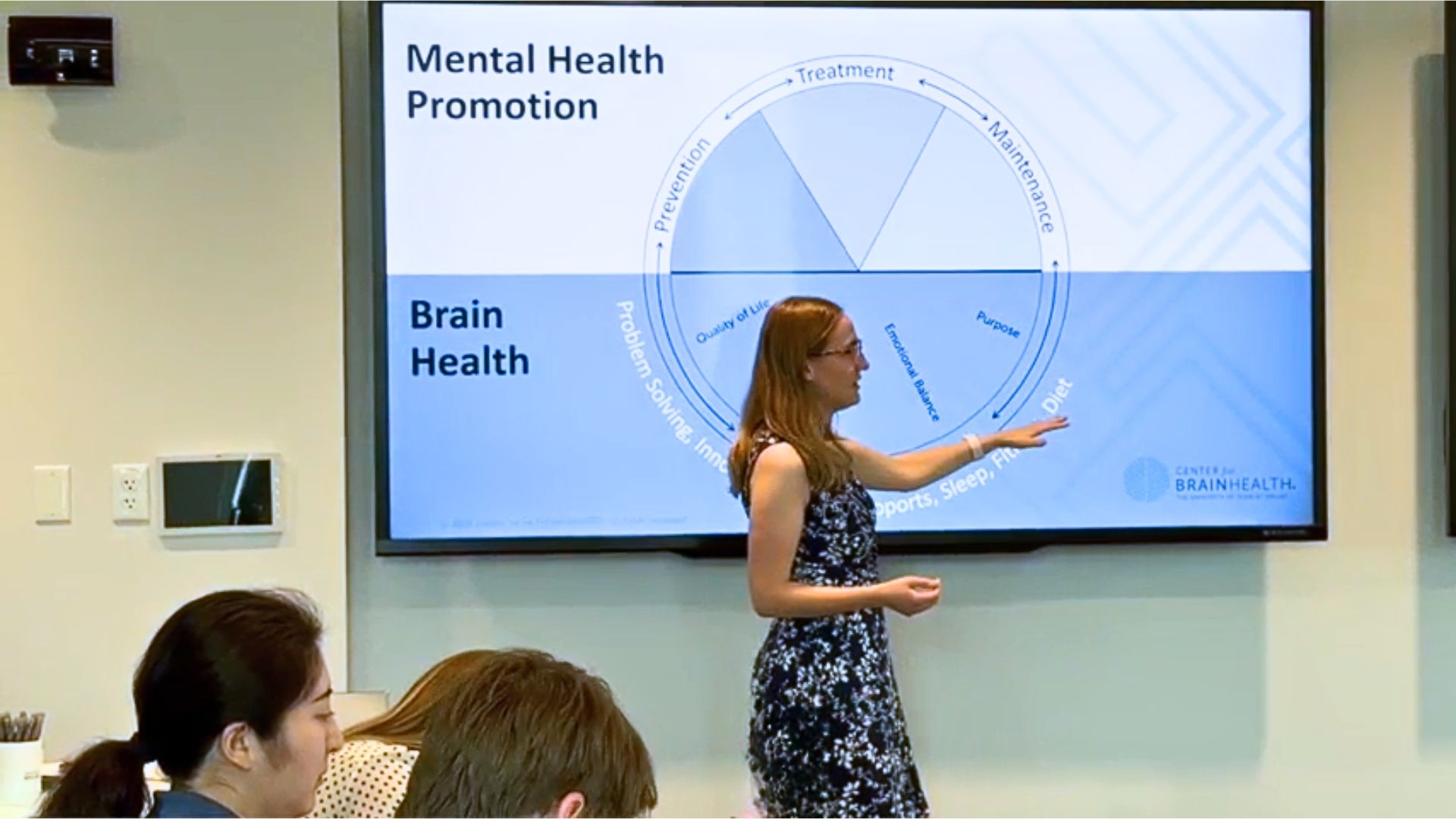
Research scientist Sarah Laane, PhD, presents at Center for BrainHealth, part of The University of Texas at Dallas.

New Frontiers in Psychology Study Flips Mental Health Paradigm: Proactive Brain Training Builds Community Resilience Before Crisis Hits

A new study challenges the traditional, reactive model of mental health care by demonstrating that proactive brain training can prevent mental health challenges and support wellness for those with history of mental illness. Strategy-based cognitive training delivered digitally can serve as a scalable, preventive shield to fortify community health.