2026 research awards advance innovative brain health science and position researchers to compete for major new dementia prevention research funding. For nearly 20 years, the Friends of BrainHealth donor circle has helped turn promising ideas into innovative brain health research. Since its inception, the group has raised $6 million and awarded 69 seedling grants, providing critical early support for scientists pursuing new approaches to understanding, protecting and strengthening brain
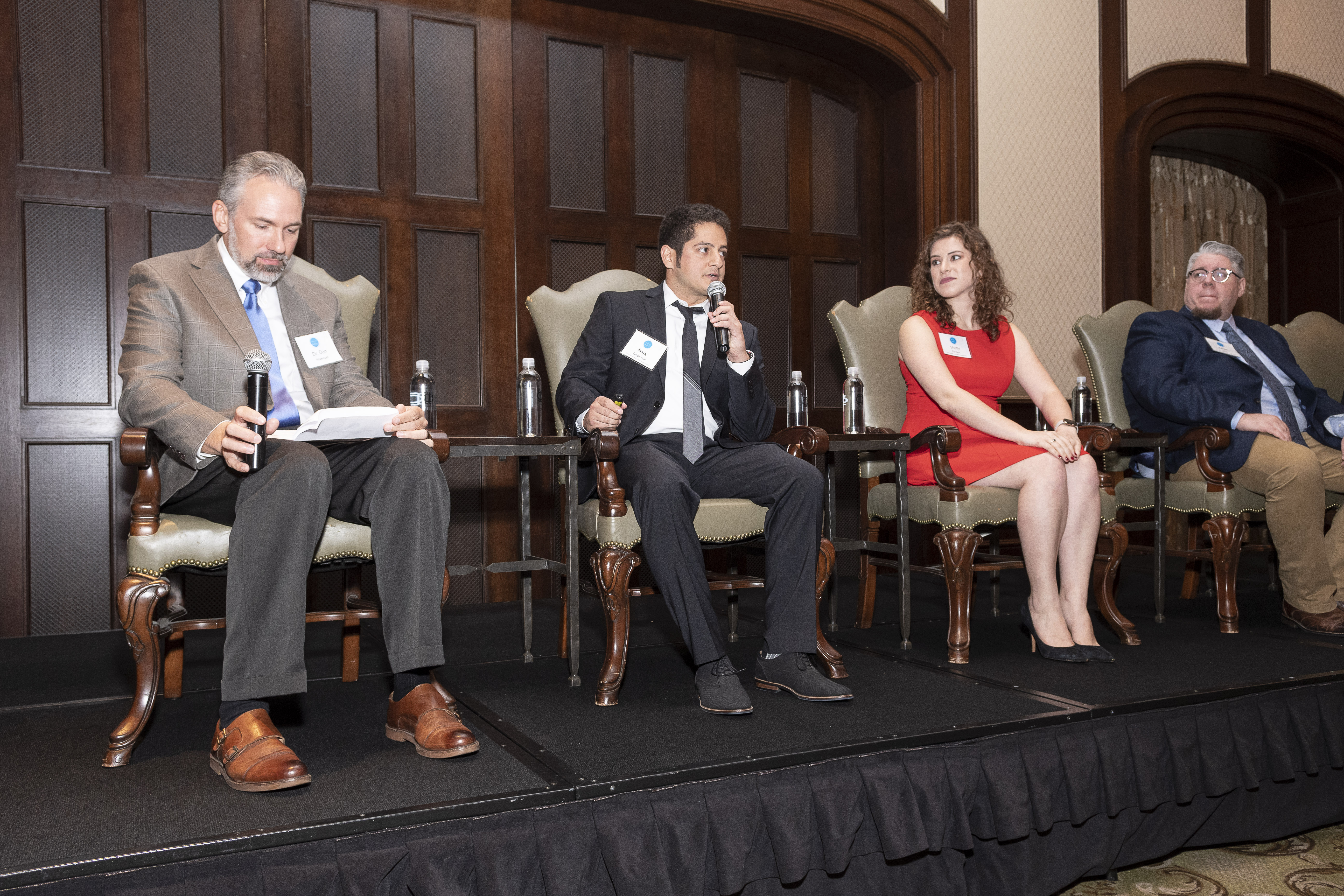
health. This year, that investment takes on new significance. The 2026 Friends of BrainHealth research awards will help position Center for BrainHealth researchers to compete for multimillion-dollar state grants from the Dementia Prevention and Research Institute of Texas (DPRIT), creating a pathway to accelerate broad-scale, translational research over the coming decade. The 2026 awards support projects spanning the earliest detection of brain changes, dementia risk and resilience, caregiver well-being, cognitive resilience, metabolic health and Alzheimer’s disease. Six winning projects were recognized at the Ramona Jones Friends of BrainHealth Scientist Selection Luncheon on September 28 at Dallas Country Club, and three finalists competed for a seventh award through a live audience vote. The live, “Shark Tank” style competition builds on a Friends of BrainHealth tradition of combining philanthropy with direct engagement in innovative science.
From Seed Funding to Greater Impact
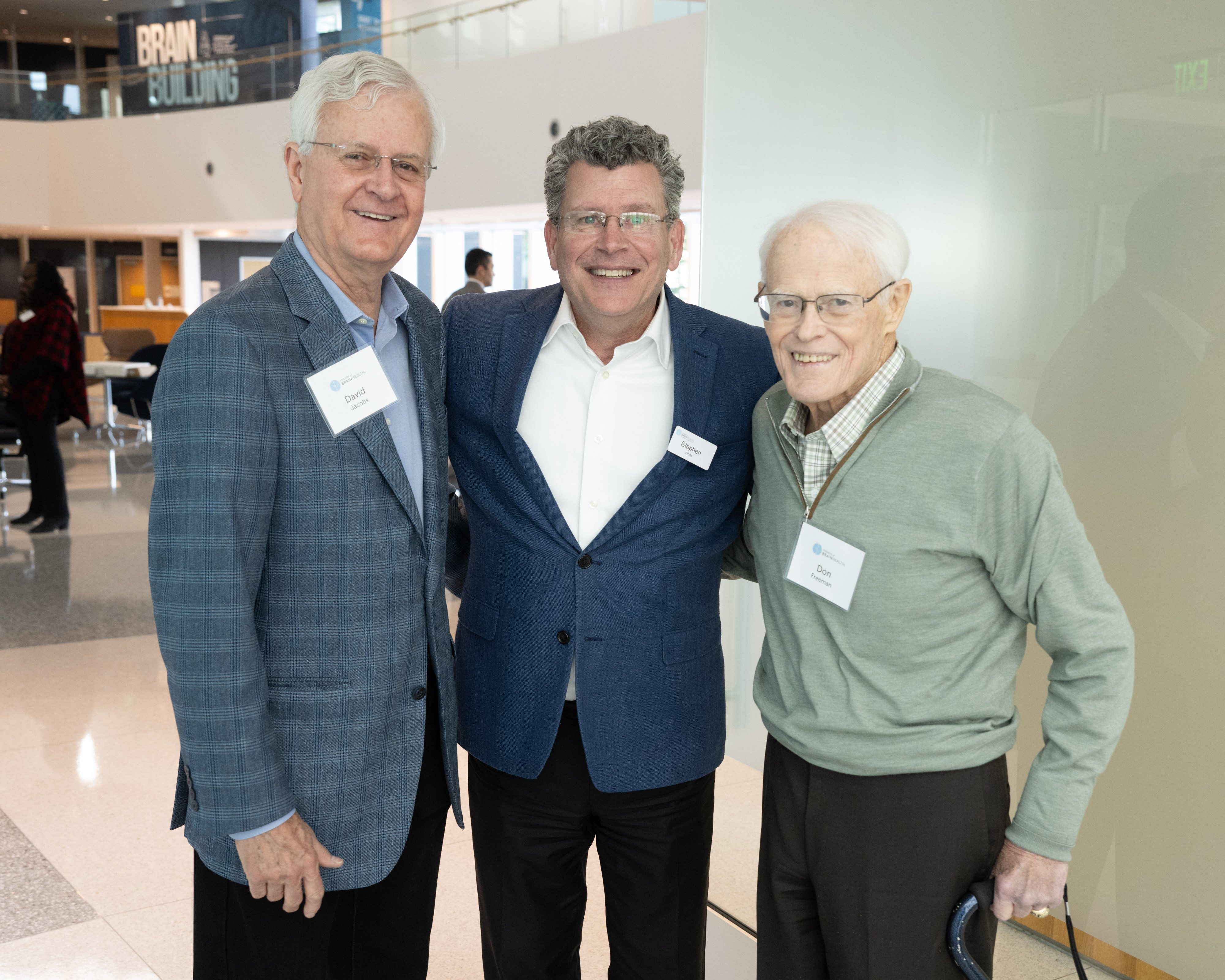
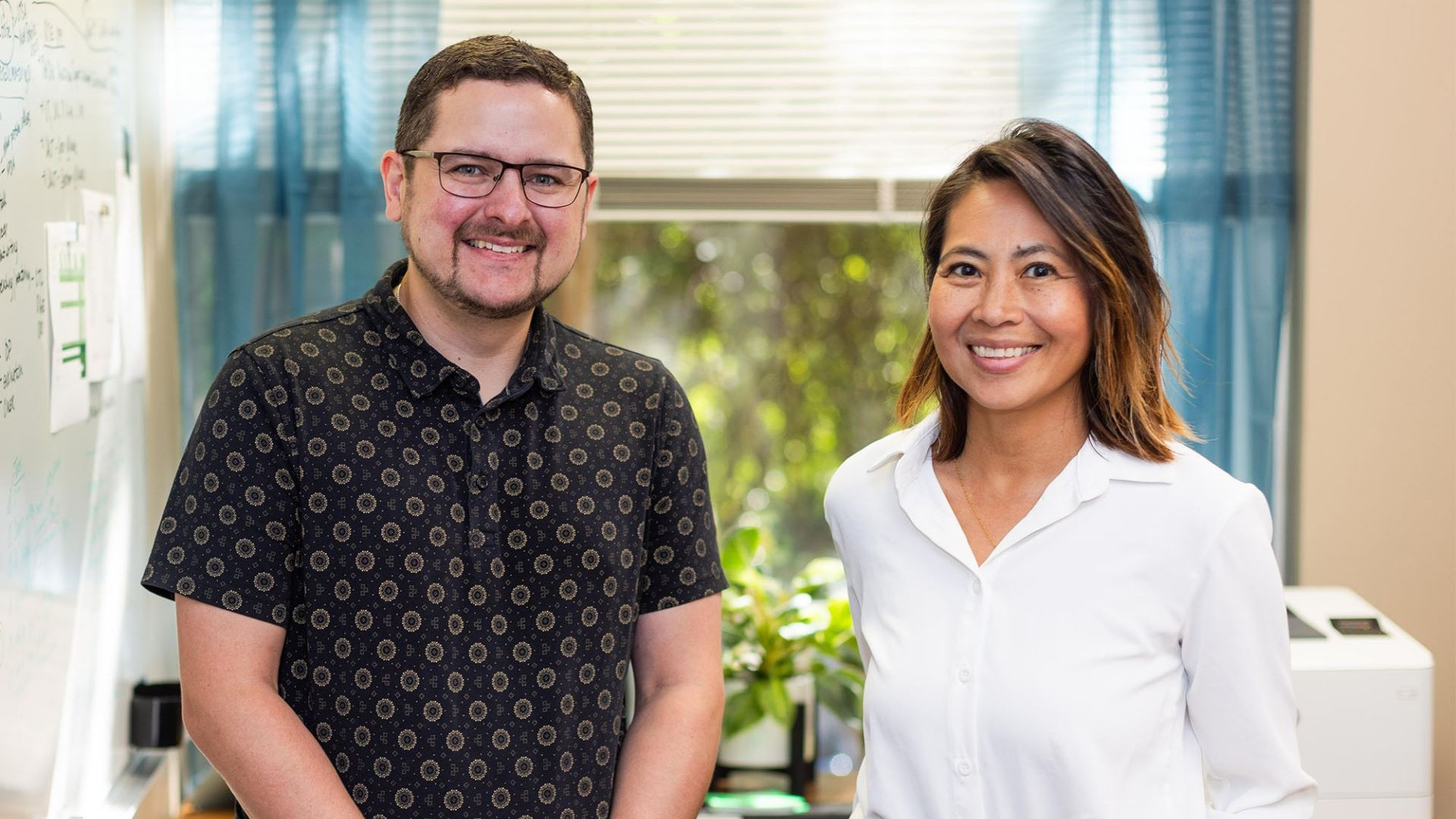
Friends of BrainHealth was founded on the idea that early philanthropic investment can give scientists the opportunity to test bold ideas and build the evidence needed to take promising research further. Nearly two decades and nearly 70 seedling grants later, the donor circle has provided $6 million to advance BrainHealth research. The emergence of DPRIT creates an important new opportunity to build on that legacy. By providing seed funding for innovative research now, the 2026 Friends of BrainHealth awards will help researchers strengthen the scientific foundation needed to pursue substantially larger state grants and expand promising work into broad-scale translational research. In addition to the Emerging Scientists category, this year the funding expanded to include a Visionary Scientist category with three awards granted to seasoned principal investigators. See photo highlights➝2026 Visionary Scientists
- Zhengsi Chang, PhD and Ziwei Zhang, PhD: Lyda Hill Philanthropies Visionary Scientist Award Can We Bend the Curve: Investigating Biomarker Dynamics Underlying Cognitive Resilience Across Heterogeneous Courses in Alzheimer’s Disease. This project will investigate biomarker dynamics underlying cognitive resilience across differing courses of Alzheimer’s disease.
- Francesca Filbey, PhD: Marlane Miller Visionary Scientist Award Preserving Brain Resilience Through Metabolic Health: A Longitudinal Neuroimaging Study of GLP-1 Based Therapy. This longitudinal neuroimaging study will examine brain resilience and metabolic health in the context of GLP-1-based therapy.
- Dan Krawczyk, PhD: Jennifer and Peter Roberts Visionary New Scientist Award A Light-Guided Training Intervention to Improve Brain Health and Reduce Dementia Risk. This project will investigate a light-guided training intervention designed to improve brain health and reduce dementia risk.
2026 Emerging Scientists
- Mary Glen, MBA: Cindy and Charlie Feld Emerging Scientist Award Measure the Brain Today: Protect Brain Health Tomorrow: Establishing Reliability and Validity of the BrainHealth Index to Monitor Earliest Brain Changes. With Sandra Bond Chapman, PhD, serving as mentor, this project will examine the reliability and validity of the BrainHealth Index for monitoring the earliest changes in brain health.
- Gayathri Maruthy, PhD: Linda and Mitch Hart Emerging Scientist Award Heading Towards or Away from Dementia? Developing Dementia Risk and Resilience Profiles from 8 Comprehensive Determinants: A Cross-Sectional and Longitudinal Examination. With Jeff Spence, PhD, serving as mentor, this project will explore dementia risk and resilience profiles using eight comprehensive determinants.
- Ashley Campos, MS and Stephanie Rodriguez, MS: Lindsay and Craig Wilson Emerging Scientist Award Lessening the Burden: Testing a Therapeutic Mindfulness-Based Approach to Improve Dementia Caregiver Well-Being. With Bart Rypma, PhD, serving as mentor, this study will test a therapeutic mindfulness-based approach to improve wellbeing among dementia caregivers.
- Christine Dugas, PhD: Audience Choice Emerging Scientist Award A Window to the Brain: Evaluating the Eye-Brain Connection in Early Detection of Dementia Risk. With Sandra Bond Chapman, PhD, serving as mentor, this study will explore how retinal vascular health (measured with a simple, non-invasive retinal scan) and neuronal health relate to dementia risk factors, with change measured with the BrainHealth Index.
“”
A Tradition of Engaged Philanthropy “Friends of BrainHealth was founded on the belief that philanthropy can help turn promising ideas into meaningful discoveries,” said Andy Walsh, 2026 Friends of BrainHealth campaign co-chair. “This year, our community of supporters invested more than $466,000 in innovative research focused on brain health and dementia prevention. What makes Friends of BrainHealth so special is that our donors are active partners in advancing the science, helping researchers build the foundation for discoveries that can improve lives across Texas and beyond.”